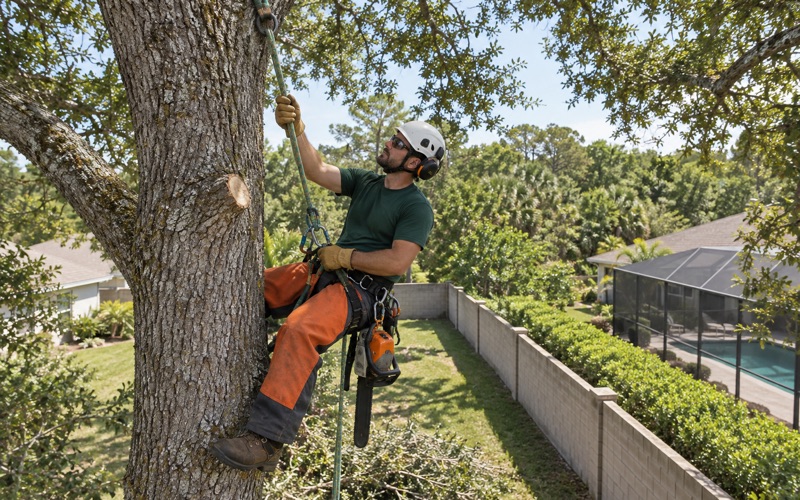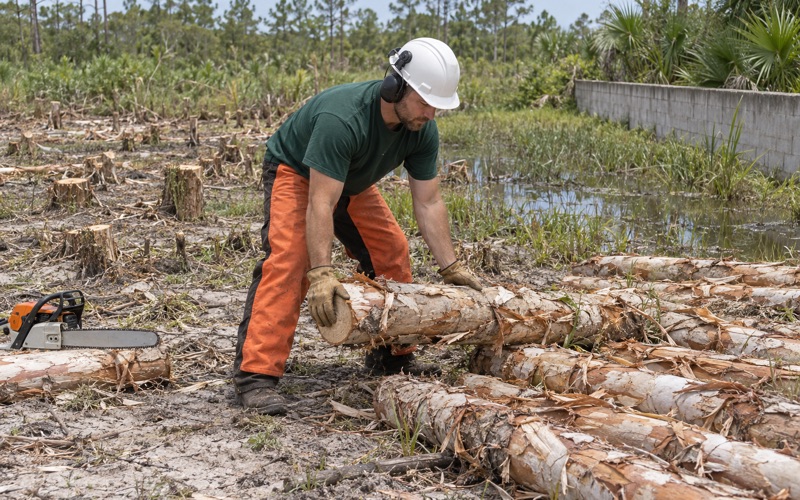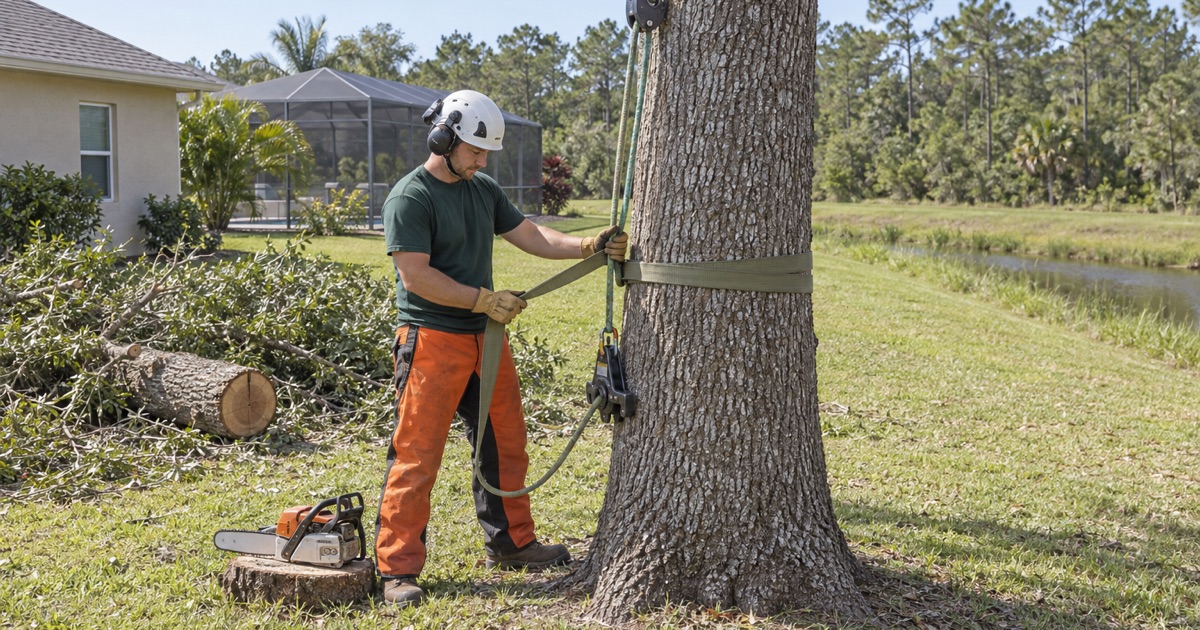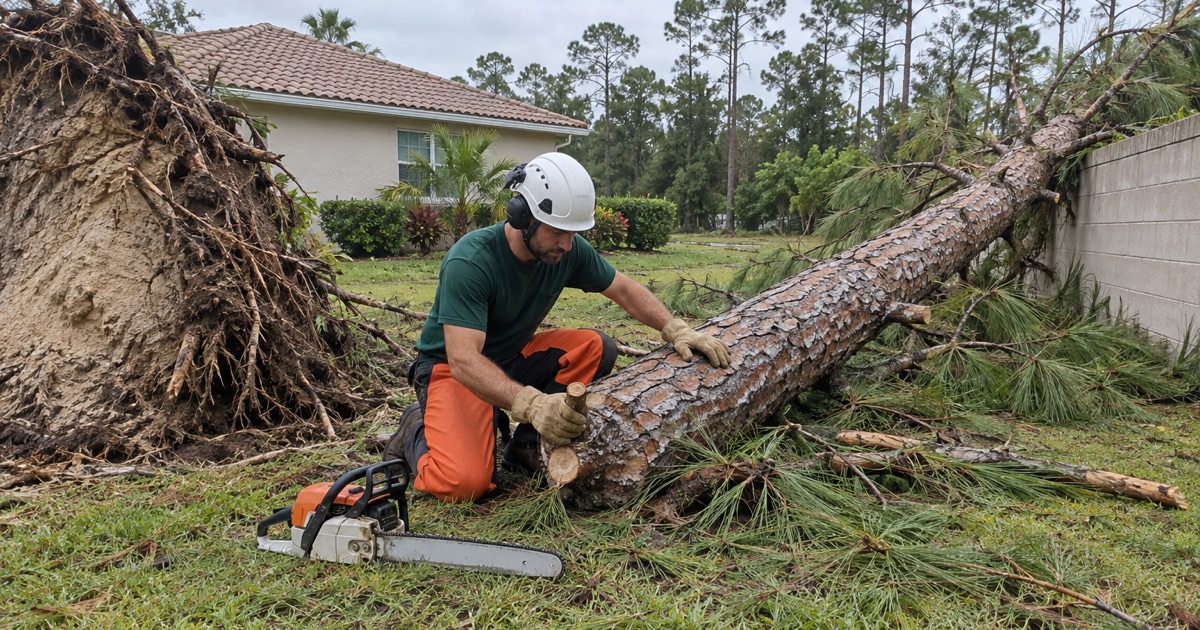
Tree Removal in North Port, FL

Twenty-plus years on oaks, pines and palms across three counties, with a written condition report before anything comes down.

North Port Tree Removal Pros has worked trees in North Port, Florida for 20+ years, and the service list is the whole list: tree removal, tree trimming and pruning, palm tree trimming and removal, stump grinding and stump removal, arborist tree risk assessment, land and lot clearing, hedge and brush removal, tree disease treatment, crane-assisted tree removal, property line tree work and emergency storm damage response. One crew, one number, and a written scope before anything is cut.

Most tree companies on this coast sell a price. The harder question at a given address is which government the tree actually answers to, because this service area crosses Sarasota County, Charlotte County and DeSoto County and takes in five separate city halls. Two houses a mile apart can sit under a city ordinance, a county land development code, or no tree rule at all beyond a deed restriction, and the answer changes what the job costs and how soon it can start.

So we lead with the determination rather than the quote. Anything we recommend removing gets a written, dated condition report first, in plain language, so the reasoning exists before the saw does. When a tree should stay, we say so and price the pruning or the cabling instead. There are also cuts we refuse outright, however the job is asked for: hurricane cuts, hat racking and topping, on oaks and on palms alike.

Get Your Free Quote

Fast response • No obligation

So we can reach you about your request.

So we can send you a confirmation after you submit this inquiry form.

  • 20+ Years on This Coast
  • Free Written Estimates
  • Dated Condition Reports

What we do

Our Services

Tree removal and arborist work in North Port, Florida

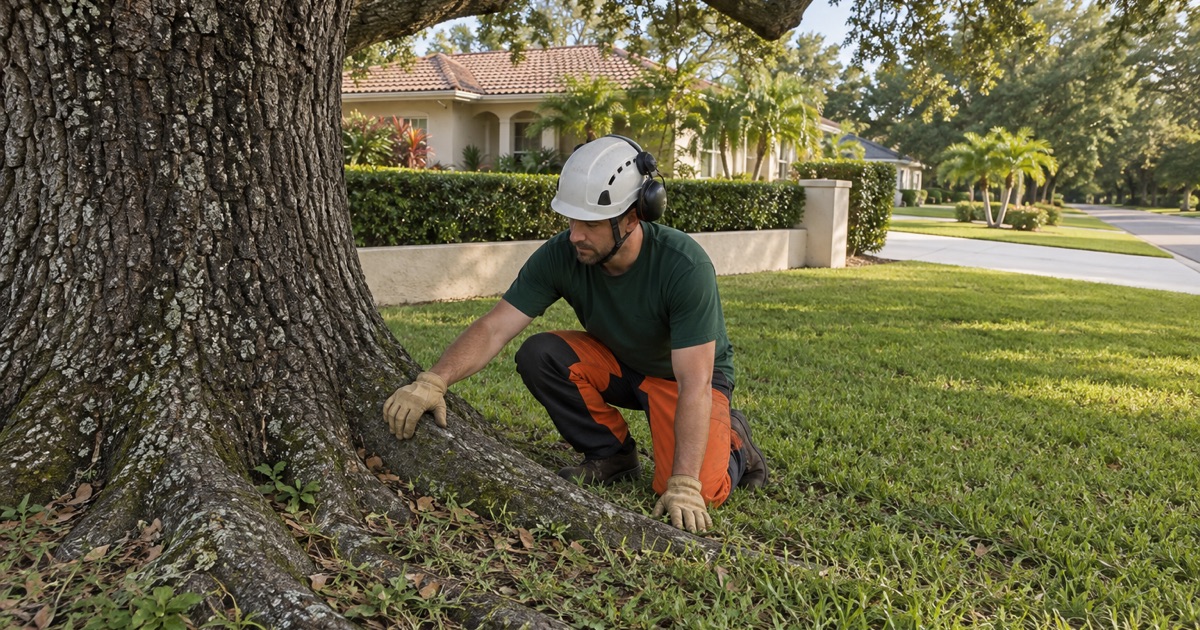
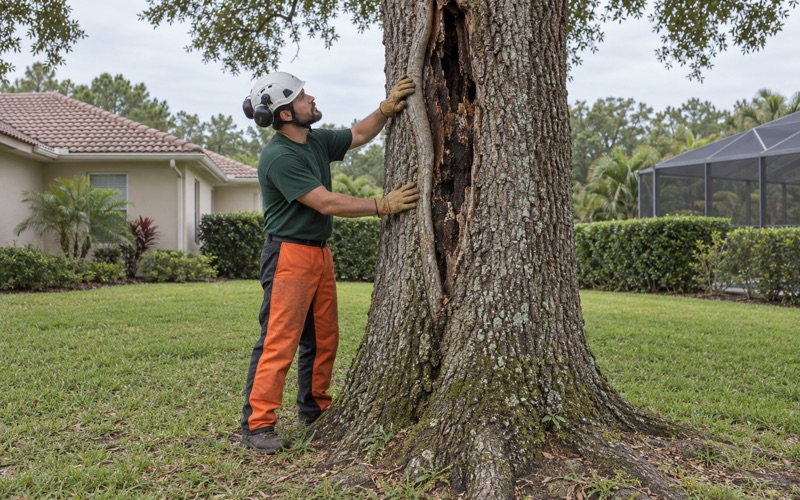
Worker examining a decay seam on a laurel oak bole in a North Port yard.

Arborist

A written, dated tree risk assessment in North Port, FL, with the defects named and the keep-or-remove recommendation in plain language.

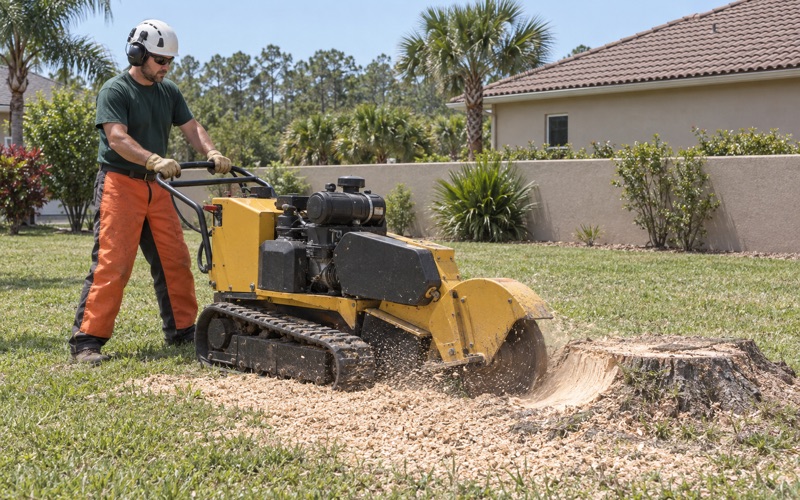
Worker sweeping a grinder wheel across a live oak stump face in North Port.

Stump Grinding

Stump grinding in North Port, FL with the depth set by the water table, the spoil hauled out, and clean fill where something is going to be planted.

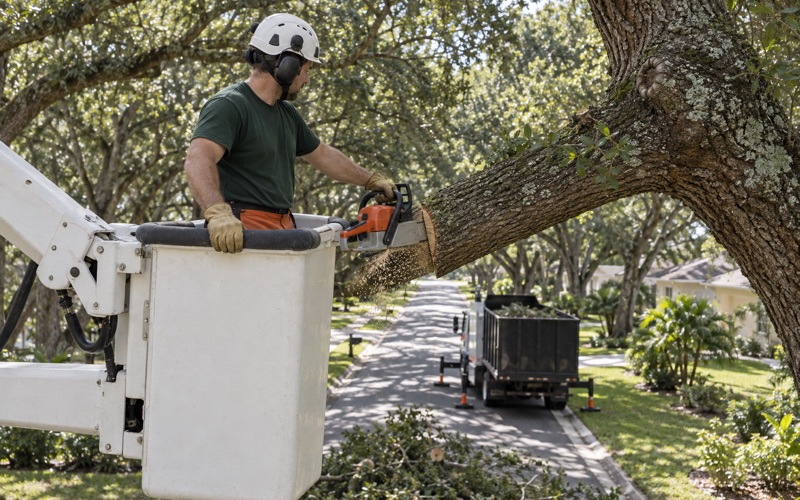
Worker making a branch collar cut on a live oak from an aerial bucket in North Port.

Tree Trimming

Tree trimming and pruning in North Port, FL worked to ANSI A300, with structural cuts on oaks and pines and clearance that holds for more than a season.

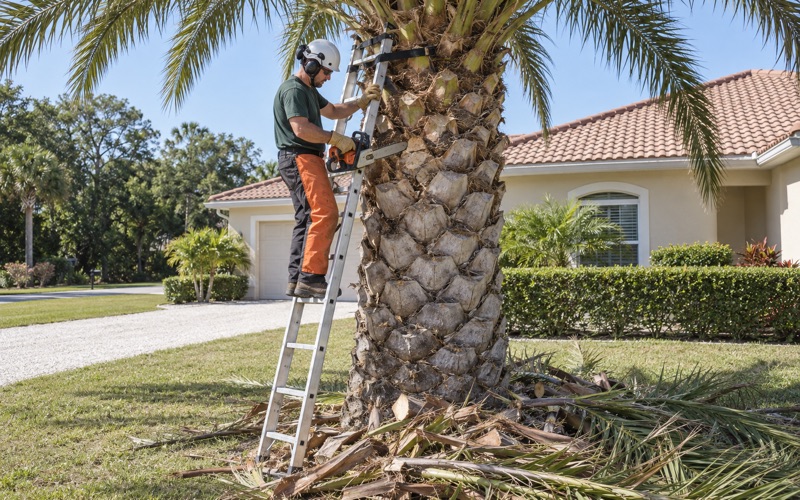
Worker on a ladder trimming a Canary Island date palm in a North Port front yard.

Palm Tree Trimming

Palm tree trimming and removal in North Port, FL, priced by clear trunk feet, with hurricane cuts and hat racking refused on every species.

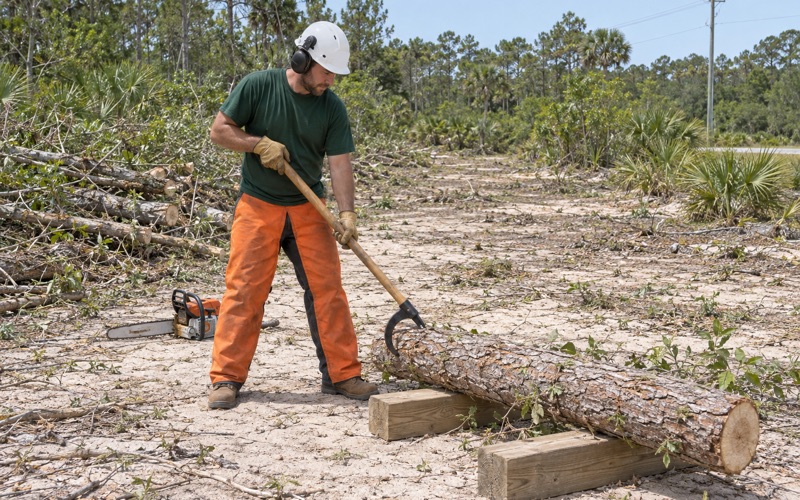
Worker rolling a cut earleaf acacia log onto a bunk on a North Port lot.

Land Clearing

Land and lot clearing in North Port, FL, scoped from the survey and the zoning before a machine moves, with the disposal route priced on its own line.

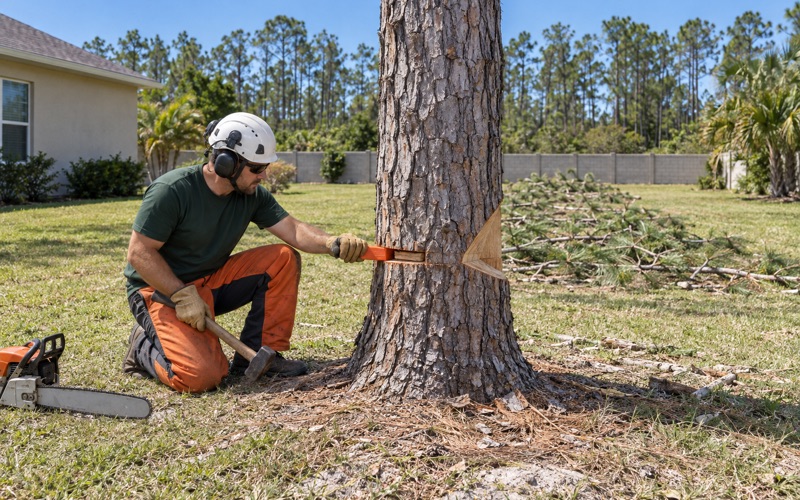
Worker setting a felling wedge in the back cut of a dead longleaf pine in North Port.

Emergency Tree Removal

Emergency and storm damage tree removal in North Port, FL, with the hazard stabilized first and the work documented for your adjuster.

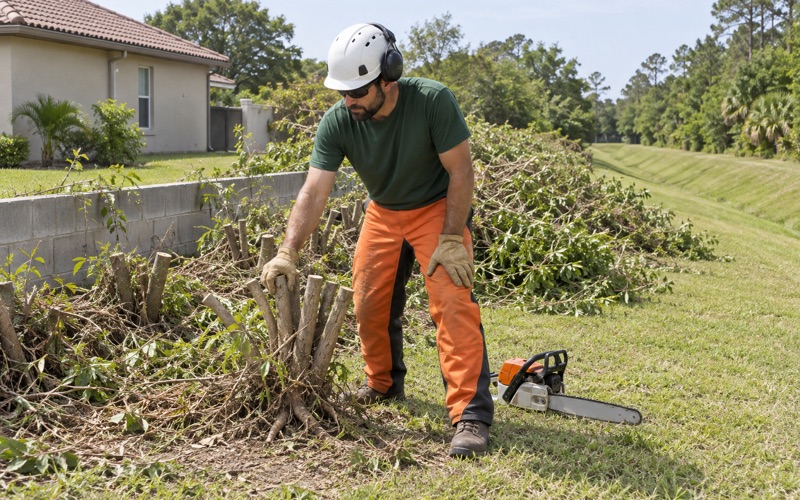
Worker pulling a cut Brazilian pepper stem cluster out of a North Port hedgerow.

Hedge Trimming

Hedge trimming, shrub removal and brush clearing in North Port, FL, cut to what the plant can carry and hauled away on its own line.

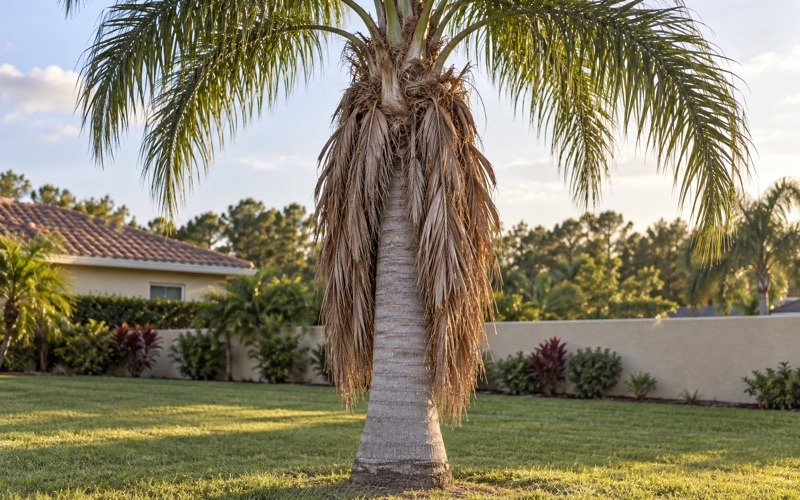
Older fronds of a declining queen palm hanging down against the trunk in North Port.

Tree Disease Treatment

Tree and palm disease treatment in North Port, FL, with a diagnosis first and an honest answer about what can actually be treated.

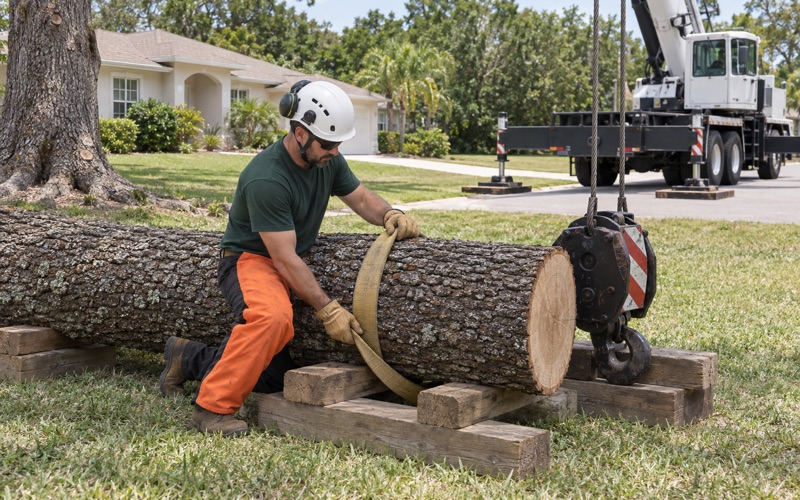
Worker dressing a choker strap around a live oak section on cribbing in North Port.

Crane Tree Removal

Crane assisted tree removal in North Port, FL for trees over roofs, cages and tight lots, with the wood lifted out rather than lowered through.

Climber cutting a laurel oak limb back to the collar above a boundary wall in North Port.

Property Line Tree

Property line and neighbor tree work in North Port, FL, scoped to the surveyed line so the invoice matches what was lawfully done.

Worker rolling a cut melaleuca log onto a brushwood pile in North Port.

Invasive Tree Removal

Invasive and exotic tree removal in North Port, FL, usually exempt from permitting, cleared in a way that does not grow straight back.

Two Decades of Tree Work, and One Word We Will Not Print

Tree worker dressing a rigging sling onto a laurel oak spar in a North Port back yard.

20+ Years of Tree Removal on This Coast

Twenty-plus years working trees between the Myakka River and the Gulf is long enough to have ground stumps in saturated sand in August and to have cleaned up after Charley, Ian and Milton. That is the part that matters: we have already met the seasonal high water table that stops a grinding wheel, and the delayed post-storm mortality that takes a live oak two summers after the wind.

What a Florida Tree Contractor License Is Worth

Florida issues no state tree contractor or arborist license, and Florida Statutes section 163.211 preempts local occupational licensing, so no county or city here can issue one either. We say that plainly rather than printing a word that would mean nothing. What does exist is International Society of Arboriculture certification, the Tree Risk Assessment Qualification, and insurance you can ask to see before a saw starts.

Why Choose North Port Tree Removal Pros

Grind Depth Set by Water

Every stump grind here is planned against the water table rather than a rated depth. Much of North Port sits on a poorly drained fine sand whose seasonal high water table runs near fifteen inches, with no rock or hardpan anywhere in the grinder’s working band, so the below-grade cut is set by what a saturated face will hold rather than by a brochure number that leaves a crater to settle for a year.

The One-Year Clock on New Lots

No quote on a newer North Port lot goes out before we check the certificate of occupancy date. The city’s residential exemption at ULDC section 45-4(K) opens only one year after that certificate issues, where unincorporated Sarasota County’s parallel exemption opens immediately, so a house in its first year needs a tree removal permit for work a neighbor across the city line does freely.

Palms Priced as Palms

A palm is not a small tree, and we never price one as though it were. One growing point, no cambium, no branch collar and a trunk that will never put on another inch means clear trunk feet and crownshaft condition drive the quote instead of diameter at breast height, so nobody pays hardwood rigging rates for a cabbage palm that comes down in one piece.

Hurricane Cuts Refused Outright

Never a hurricane cut, a hat rack or a topping cut, on any species, however the job is asked for. Stripping a palm to a few upright fronds removes the reserves it needs to rebuild and opens fresh wounds the palmetto weevil finds, and topping an oak answers a wind problem with a crop of weakly attached regrowth, so we quote a crown reduction or directional pruning instead.

Gate Fees on Their Own Line

Every quote itemizes haul-away and gate fees separately, because North Port has no inbound tipping gate of its own and the city ordinance expressly refuses contractor-generated yard waste at the curb. The horticultural waste gate rate also changes at each county line we cross, so disposal is shown as what it is rather than buried in a lump sum that hides where your debris went.

Hurricanes, Storms and Emergency Tree Work

Worker at the butt of a windthrown slash pine leaning on a block boundary wall in North Port.

Charley in 2004 and Ian in 2022: Two Different Storms

Charley arrived in August 2004 as a compact, fast, very high wind storm, and Ian’s second landfall in September 2022 put far more water over far more ground. Eighteen years apart, they left different damage, so we read the failure pattern before quoting the repair. Snapped stems and shredded crowns are a wind story; a tilted root plate on an otherwise unbroken tree is usually a water one.

Wind Damage and Drowned Root Plates Need Different Repairs

Slash pine and sand pine snap. Live oak and laurel oak more often lose anchorage when fresh water stands over the root plate for days and the fine roots die back. A snapped stem is a removal decision made that week, while a drowned root system is a monitoring decision with a cabling or crown reduction option in front of it, which is why the two are never quoted the same way.

Delayed Post-Storm Mortality

Some trees fall in the storm and some fall two summers later from the same injury, as root decay and a damaged root collar finally outrun what the canopy can support. We flag delayed post-storm mortality candidates during an arborist tree risk assessment, reading lifted soil at the base, a thinning upper crown and fruiting bodies at the root collar, so the removal is scheduled work rather than emergency-priced work.

Why a Hurricane Cut Makes a Palm More Likely to Fail

A hurricane cut strips a palm back to a handful of upright fronds on the theory that less canopy means less wind load. A palm has one growing point and no quick way to replace stored reserves, so the cut starves the bud, thins the fronds that follow, and opens wounds insects find. We remove dead and hanging fronds only, and we decline the cut on every species.

Reading a Mounded Root Plate Against a Fresh Lean

A trunk that has leaned since it was planted is usually reaching for light rather than failing. A lean that is new shows itself at the ground: soil mounded or cracked on the opposite side, the root plate visibly lifting, turf torn at the root collar. We probe the plate and check for movement before calling either one, because that difference decides between a removal and a cabling and bracing job.

Limbs That Drop on a Still August Afternoon

Large limbs come down on windless August afternoons, most often on live oak and laurel oak, when a long horizontal limb carrying a full wet canopy finally exceeds what an included bark union can hold. During tree trimming we look for included bark, co-dominant stems and end-weighted limbs over driveways and pool cages, then reduce the end weight or cable the union rather than waiting for it.

What a Debris Removal Sublimit Actually Pays

A Florida homeowner policy generally pays toward tree debris only once the tree has damaged covered property, and then under a sublimit that is a small fixed figure or a small share of the dwelling limit rather than the whole cost of the work. We itemize the quote so the covered portion and the remainder are legible to an adjuster instead of arriving as a single number.

When a Screen Pool Cage Is Not Covered Property

Screen enclosures and pool cages are frequently excluded or separately limited on Florida policies, so a limb through a cage can be the homeowner’s entire cost even where the same limb on a roof would be paid. That changes sequencing more than scope: we remove the hazard above the cage first and write the scope so the cage contractor can follow without a second mobilization.

A Tree on a Power Line: Call the Utility First

If a tree or limb is touching a conductor, the first call is the utility rather than a tree company. Nobody may work a tree in contact with an energized line until it is cleared or de-energized, and ANSI Z133 sets minimum approach distances that no quote overrides. We take the details, stage the crew, and start the moment the utility releases the site.

No Crew Climbs in a Named Storm

No climber goes up and no bucket goes out while a named storm is over this coast, whatever a September advertisement promises. We take the call, record the address and the hazard, and stage the work for the first safe window afterward. A company claiming otherwise is describing an insurance problem rather than a capability, and emergency tree removal starts when the wind stops.

Permits, HOA Rules and Property Lines

Worker reading the root flare of a large live oak beside a low front wall in North Port.

Florida Statutes Section 163.045, in Plain Words

Under Florida Statutes section 163.045, a local government may not require notice, application, approval, permit, fee or mitigation to prune, trim or remove a tree on residential property where the owner already possesses documentation from an ISA-certified arborist or a Florida licensed landscape architect showing the tree presents an unacceptable risk. The documentation has to exist before the work, which is the part most people have backward.

The Limits of the Residential Preemption

The statute was narrowed to single-family detached buildings on lots actively used for single-family residential purposes, so condominiums, townhouses, duplexes and vacant lots sit outside it. It does not reach mangroves, it does not excuse work in a right-of-way or a canopy road zone, and it does not make the documentation optional. A vegetation removal permit is still the route in each of those cases.

Unincorporated Addresses Where the HOA Is the Only Rule

Nine of the fourteen communities around this hub are unincorporated census-designated places, so there is no city hall to permit anything and the county code is the background rule. On an owner-occupied residential lot that background often exempts the work outright, which leaves a deed restriction and an architectural review committee as the only approval you will actually meet.

Deed Restrictions Read Before the Quote

We ask for the declaration of covenants before quoting in a deed-restricted community, because a review committee that meets monthly can add weeks to a job that takes a morning. Reading it first also catches the clauses that bite: replacement species lists, minimum canopy percentages, and the ones that treat a palm differently from a shade tree when a replacement is required.

North Port Protected Trees at Twelve Inches, Heritage at Twenty-Four

Inside North Port, ULDC section 45-9 makes a slash pine, longleaf pine, live oak or laurel oak a protected tree from twelve inches diameter at breast height, a sabal palm protected at four and a half feet of clear trunk, and any native tree of twenty-four inches or more a heritage tree. Multi-stemmed trees have each stem measured and added together as one tree.

Sarasota, Charlotte and DeSoto Counties Give Three Answers

Unincorporated Sarasota County exempts an owner-occupied residential lot of five acres or smaller once a certificate of occupancy has issued. Charlotte County carries its tree requirements inside its site design standards instead. The City of Arcadia’s land development code contains no tree removal permit, no protected-tree definition and no DBH threshold at all. Same crew, same truck, three different answers by county line.

Mangroves Sit Outside the Preemption Entirely

Mangroves are governed by the Mangrove Trimming and Preservation Act, and the residential preemption in section 163.045 does not reach them by design. Much of that work is reserved to a professional mangrove trimmer, and on the bay side of this ring the county holds delegated authority over it. We decline mangrove trimming and name who may lawfully do it instead of taking the job.

A Tree Straddling the Surveyed Property Line

A trunk standing on the boundary is generally owned by both adjoining owners, and neither one may remove it alone. We quote property line tree work only with both owners named on the scope, and we ask for the survey rather than the fence, because a fence built to somebody’s guess is the usual reason two neighbors disagree about whose tree it is.

Trimming Back to the Line, and Who Pays for It

A property owner may generally cut encroaching branches and roots back to the boundary at their own expense, using sound cuts that do not kill the tree. What that right does not include is sending the bill next door, or reaching across the line to make the cut. We write the scope to the surveyed line so the invoice matches what was lawfully done.

The Arborist Documentation Almost Nobody Sells

The statute’s route runs on documentation from an ISA-certified arborist or a Florida licensed landscape architect, assessed under the ISA Best Management Practices Tree Risk Assessment Second Edition 2017. Most removal companies here do not produce one, because it sometimes concludes the tree stays. We write it either way, since a risk assessment that can only reach one answer is not an assessment.

Palms, Species and Tree Disease

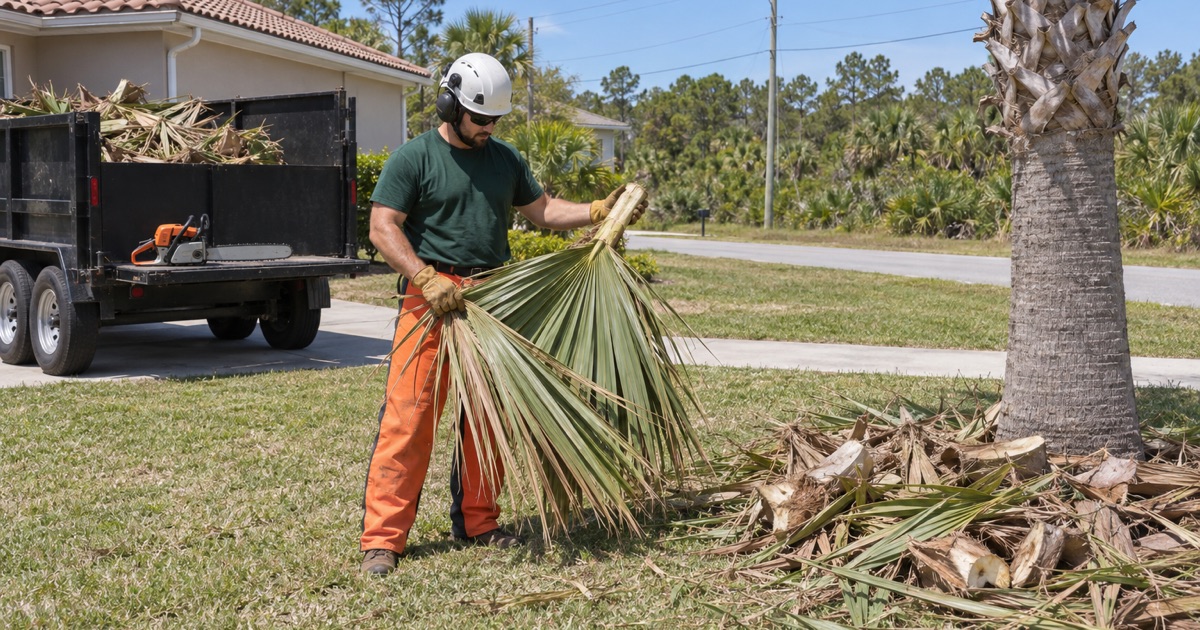
Worker gathering cut sabal palm frond bases on a North Port lot.

A Palm Is Not a Tree, and Almost Nothing Carries Over

A palm is a monocot. There is no cambium, no annual ring, no branch collar and none of the wound compartmentalization a hardwood uses to walk off an injury. So crown cleaning, cabling, crown reduction and wound dressing either do not apply or actively harm it, and palm tree trimming is quoted from clear trunk feet and bud condition rather than from diameter.

One Growing Point, and a Trunk That Is Finished Growing

A palm carries a single growing point at the top of the trunk, and that trunk reaches its final diameter early and never adds another inch. Damage the bud and the palm is dead even while it still looks green, which is why we will not spike a trunk, will not cut into the crownshaft, and keep every rigging path clear of the spear.

Penciling: The Taper That Never Fills Back In

When a palm is short of water or nutrients the trunk it lays down narrows, and that pencil-thin section is permanent, because the trunk cannot thicken later to correct it. Penciling is therefore a dated record of a past problem and a structural weak point at the same time, so we read it as history and check what is carried above it.

Frizzle Top Is a Manganese Deficiency, Not an Infection

Frizzle top shows as new fronds emerging small, frizzled and scorched at the tips, most visibly on queen palm and royal palm, and it is a manganese deficiency rather than a pathogen. Caught while the bud is still alive it is correctable with the right soil amendment, so that palm goes to tree disease treatment and correction instead of onto the chip truck.

Lethal Bronzing and Spear Leaf Collapse

Lethal bronzing is a phytoplasma disease that moves up a palm from the lower fronds, drops fruit early and ends in spear leaf collapse, and it is not curable once symptoms show. Laboratory testing on trunk tissue is what separates it from a deficiency, so we advise the test before a removal that the whole street is going to see and copy.

A Ganoderma Conk at the Base of a Palm

Ganoderma zonatum causes Ganoderma butt rot, and a shelf-shaped conk at the base of the trunk means the lower trunk is already decayed. There is no fungicide, soil drench or injection that changes that, and the fungus persists in the site afterward, so the honest recommendation is removal, grinding, and not replanting another palm in the same spot.

Palmetto Weevil, and the Cuts That Invite It

The palmetto weevil is the largest weevil in North America, and it is drawn to stressed and freshly wounded palms, laying into the crown where the larvae destroy the bud from inside. Over-pruning, trunk spiking and transplant stress are the usual invitations, so we cut dead and hanging fronds only and leave the living crown and crownshaft untouched.

Laurel Wilt Does Not Take Laurel Oak

Laurel wilt is a vascular disease of the laurel family, redbay and swamp bay and avocado among them, carried by an ambrosia beetle, and the rapid wilt with black vascular streaking it leaves behind is hard to mistake. Laurel oak shares the name and nothing else; it is an oak and not a host. We name the species before we name the disease.

Sabal, Queen, Royal and Mexican Fan From the Driveway

Sabal palmetto, the cabbage palm, carries costapalmate fronds and often a persistent frond skirt, while queen palm is feather-leaved, self-cleaning and fast. Royal palm is feather-leaved on a smooth gray trunk under a heavy crownshaft. Mexican fan palm runs tall and thin with a fan frond and a thorned petiole. Species sets the price, the rigging and the disease list.

Invasive Tree Removal the Code Treats Differently

Brazilian pepper, carrotwood, Australian pine, melaleuca, Chinese tallow and earleaf acacia sit on the Florida noxious weed list or the Florida Invasive Species Council category lists, and North Port’s ULDC section 45-4(A) exempts them from the tree removal permit by name. Invasive tree removal is often the cheapest permitted work on a lot, so we check the list before assuming a tree is protected.
Stumps, Roots, Debris and Land Clearing

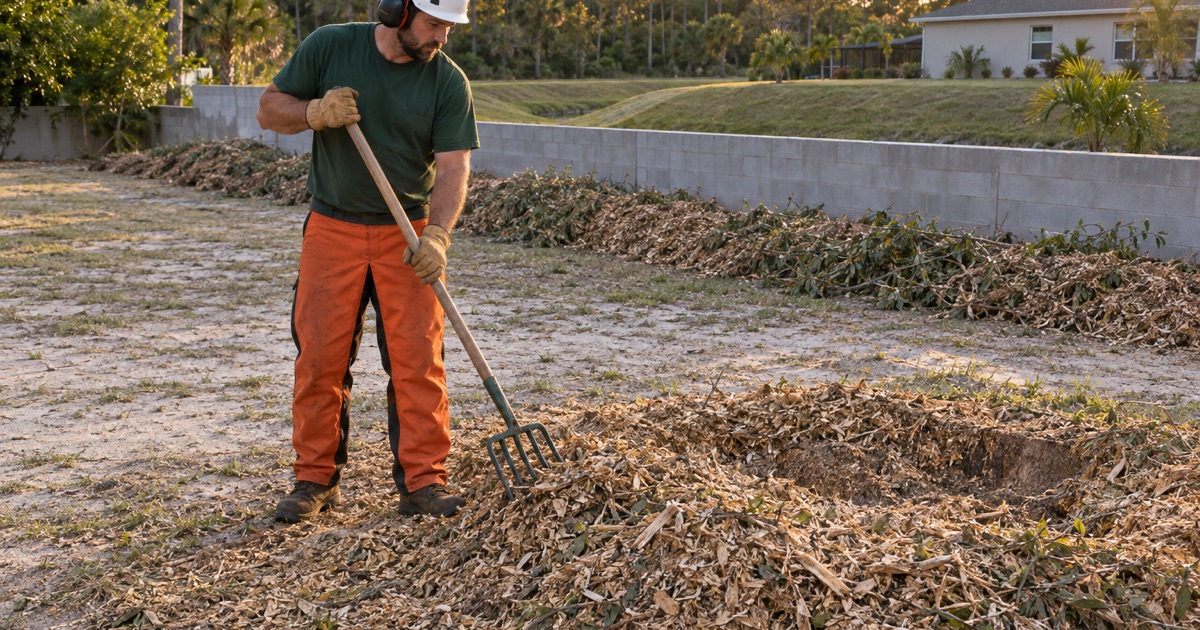
Worker windrowing laurel oak grinding chips on a North Port lot.

What a Tree Removal Quote Includes

A removal covers felling or dismantling the tree, lowering the wood, cutting it to haulable length, clearing the brush and raking the work area. Stump grinding, spoil removal and backfill, gate and tipping fees, crane or spider lift time, and fence panel removal and reset are separate lines, priced before we start rather than discovered on the invoice afterward.

The Stump, the Grindings and the Crater

Grinding leaves a cone of wood chips mixed with sand, and a depression where the root crown used to be. Grindings are acidic, low in available nitrogen and will settle for about a year, so shoveling them back as fill buys a sunken spot and a dead patch. We quote the spoil hauled out and clean fill brought in wherever something is going to be planted.

How Deep a Stump Grinder Actually Cuts

A stump grinder’s below-grade cut runs roughly twelve to twenty-five inches, depending on the machine and the wheel. Across much of this ring the limit is not rock but a seasonal high water table near fifteen inches, where the face floods, the spoil will not stack and the wheel loads. We set the depth to the site and say so rather than promising a number.

The Spodic Layer, Where It Exists and Where It Does Not

Myakka fine sand and EauGallie fine sand carry a spodic horizon, a dark cemented sand a grinding wheel can feel, and it generally sits below the depth a stump grind reaches. The hub’s own Pineda fine sand profile has no spodic layer in that band at all. We read the soil survey for the address instead of carrying one site’s assumption to the next.

Surface Roots Under a Driveway and in a Drain Field

Laurel oak and live oak lift concrete with shallow structural roots, and the repair is a choice between cutting anchorage and reinstating the slab over a root bridge. In a septic drain field the same roots follow the moisture straight into the laterals. We use root collar excavation and an air spade to see which roots are structural before anything is severed.

Roots in a Sewer Line: Plumber First, Then the Tree

A blocked lateral is a plumber’s call and a camera inspection, because roots enter at an existing joint failure rather than breaking sound pipe. If the camera finds the same tree recolonizing a repaired line a second time, the tree is the problem and removal belongs on the table. We wait for the camera instead of selling a removal off a slow drain.

Where the Wood Goes and Who Pays the Gate

Brush is chipped on site, trunk wood is cut and hauled, and both go to a permitted facility at a horticultural waste gate rate we pay and then itemize. Chips have real value as mulch and we will leave them at no charge if you want them, but nobody is paying you for the wood off a residential removal, whatever a door-knocker says.

Curbside Yard Waste Will Not Take a Removal

North Port’s solid waste rules cap yard waste at four-foot lengths, a two-foot bundle diameter and thirty-five pounds, and the city expressly tells residents not to let tree companies, arborists or landscapers leave debris at the curb. A twelve-inch trunk section is not a bundle under any reading of that, so hauling is part of the price rather than an upsell.

Land and Lot Clearing Is a Different Permit

Clearing a vacant lot is generally reviewed as vegetation removal or site work rather than as a tree removal permit, with its own submittals, and in North Port the owner-occupied residential exemption does not reach a vacant lot at all. We scope land and lot clearing from the survey and the zoning first, because the permit path rather than the machine time sets the schedule.

What the Utility Will Clear Free, and What It Will Not

A franchised utility will prune or remove a tree growing into its own conductors at no cost to you, worked to its line-clearance standard rather than to ANSI A300 aesthetics. It will not haul your storm debris, will not touch a tree that threatens only your house, and inside a canopy road zone it owes the city advance notice first. Knowing that line saves a wasted call.

Areas We Serve

North Port Tree Removal Pros provides tree-removal throughout the greater North Port area, with the same crews and the same standards on every job.

Good to know

Frequently Asked Questions

Do you charge for an estimate?

No. We come out, look at the tree, and leave a written scope and price at no cost. Where we are recommending removal, that visit also produces the dated condition report that explains why, so you are reading a reason rather than a number. Nothing is cut on the estimate visit.

What drives the price of a tree removal?

Species, height, trunk diameter, lean, and above all what sits underneath it. A pine in an open yard comes down in pieces off a rope; the same pine over a pool cage is a rigged dismantle or a crane pick. Access for the chipper, gate width, and the haul distance to a disposal gate finish the number.

Is your company licensed?

Florida issues no state tree contractor or arborist license, and Florida Statutes section 163.211 stops a county or city from requiring a local one, so nobody working trees in this state holds a tree license. Ask instead for International Society of Arboriculture certification, the Tree Risk Assessment Qualification, and current insurance you can read.

How soon can you start once I approve the quote?

Scheduled work usually goes on the calendar within a week or two, depending on crane or lift availability. What moves that date is paperwork rather than crews: a permit, an architectural review committee, or a utility release can add weeks. We tell you which of those applies to your address when we quote, not afterward.

Do I need a permit to take down a tree in my yard?

It depends entirely on the address. An unincorporated lot may be exempt outright, a North Port lot inside its first year after certificate of occupancy may not be, and a protected or heritage tree is its own question. We determine which rule reaches your property before quoting, and we pull the permit when one is needed.

Is stump grinding included in the removal price?

It is a separate line, because not everybody wants it. If you are replanting or laying turf there, we also quote hauling the grindings out and bringing clean fill in, since grindings settle and will not grow anything for a season. You see all three numbers and choose.

Do you haul everything away?

Yes, and it is itemized. Brush is chipped on site and the trunk wood is hauled to a permitted facility, which charges a gate rate that changes at each county line. The city will not take contractor debris at the curb, so there is no version of this job where the wood stays on your grass.

A tree is already on my house. What happens now?

Call us and describe what it is resting on. If any part of it touches a power line, call the utility first, because nobody may work a tree in contact with an energized conductor. We stabilize and remove what is safe to remove, document it for your adjuster, and stage the rest for daylight.

Will you top a tree or hurricane cut my palms if I ask?

No, on either one and on any species. Topping answers a wind problem with weakly attached regrowth and permanent decay at every cut, and a hurricane cut starves a palm's single growing point and opens it to insects. We will quote a crown reduction, directional pruning, cabling, or removal, and explain which one the tree actually needs.

What if the report says the tree should stay?

Then that is what it says, and we quote the pruning, the cabling or the root work instead. A risk assessment that can only ever reach one conclusion is a sales document, so ours returns the answer the tree supports. You keep the written report either way, which is also what the statute's permit exemption runs on.

Ready to Get Started?

Request a free quote today and we'll get back to you fast.